
Introduction
The Leisure Walking Systems Working Group (LWSWG) impact project represents a significant milestone in bridging academic research with practical industry applications in the domain of place-based walking systems. Over a three-month period funded by the Horizon CDT Impact Grant, this project has successfully delivered comprehensive resources that advance our understanding of how improved place representation can enhance leisure walking systems. This reflection examines the project’s achievements, challenges encountered, lessons learned, and the broader implications for the field.


For those interested in exploring the comprehensive resources developed through this project, the complete documentation, implementation guides, and demonstrator systems are available at lwswg.jwilliams.science. This digital platform serves as the central hub for accessing all project outputs and ongoing community engagement.
Project Overview and Objectives
The LWSWG impact project was conceived with the ambitious goal of creating a comprehensive knowledge resource that would serve both academic researchers and industry practitioners working on leisure walking systems. The project aimed to address a critical gap in the field: the lack of integrated, accessible resources that combine theoretical foundations with practical implementation guidance for place-based walking systems.
The three-month timeline, whilst ambitious, was strategically designed to create momentum and deliver tangible outputs that could immediately benefit the community. The project was structured around four key deliverables: benefits and market differentiators analysis, digital presence development, demonstrator system creation, and comprehensive technical reporting. This structured approach ensured that each deliverable built upon previous work whilst maintaining focus on practical applicability and industry relevance.
Key Achievements and Impact
Comprehensive Knowledge Integration
One of the most significant achievements of this project has been the successful integration of research findings across multiple domains. The documentation spans eight distinct research areas, from recommendation systems and geospatial integration to user experience design and accessibility guidelines. This integration represents a departure from traditional academic silos, demonstrating how different aspects of walking systems can work together cohesively.
The creation of over 25 technical documentation pages provides a substantial knowledge base that addresses both theoretical foundations and practical implementation challenges. This breadth of coverage ensures that practitioners can find relevant guidance regardless of their specific focus area within walking systems development.
Industry-Ready Resource Development
The project’s emphasis on creating industry-ready resources represents a significant contribution to the field. Rather than producing purely academic outputs, the LWSWG has developed practical tools including implementation guides, evaluation frameworks, and technical specifications that support immediate application in real-world projects.
This industry focus is particularly evident in the benefits and market differentiators analysis, which identifies competitive advantages for organisations implementing improved place representation in their walking systems. By translating academic research into business value propositions, the project has created a bridge between research and commercial application.
Digital Platform for Knowledge Sharing
The development of a comprehensive website and digital platform represents a strategic investment in long-term knowledge sharing. The website serves not only as a repository for current findings but also as a foundation for ongoing collaboration and community building.
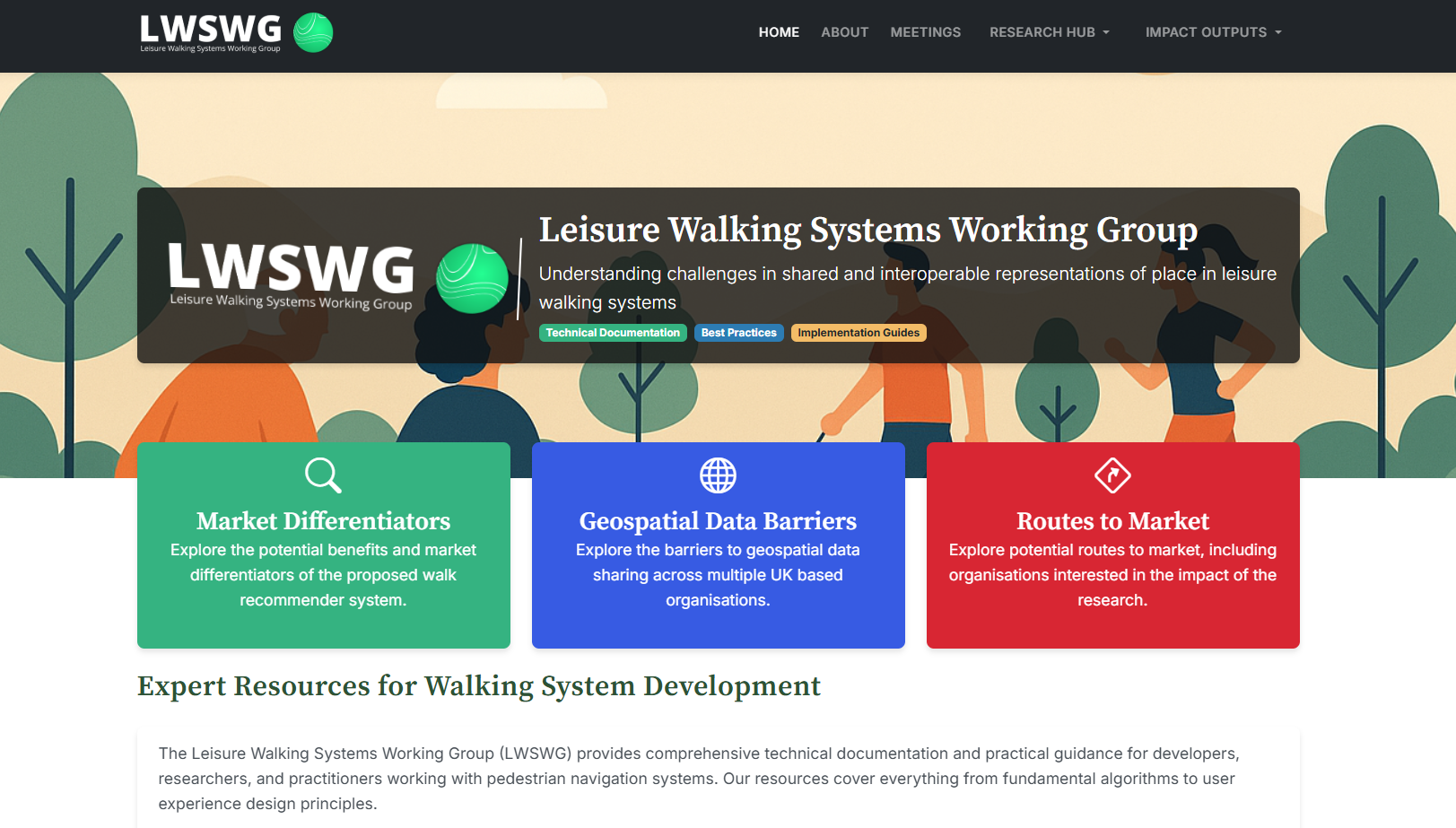
The website’s structure, with its mega-menu navigation and organised content hierarchy, demonstrates careful consideration of user experience and accessibility. This attention to usability ensures that the resources can be effectively utilised by diverse audiences with varying levels of technical expertise.
Demonstrator Framework
The creation of an integrated documentation framework as a demonstrator system represents an innovative approach to showcasing practical implementation. Rather than developing a single software prototype, the project demonstrates how multiple approaches can work together effectively through comprehensive documentation and cross-referenced resources.
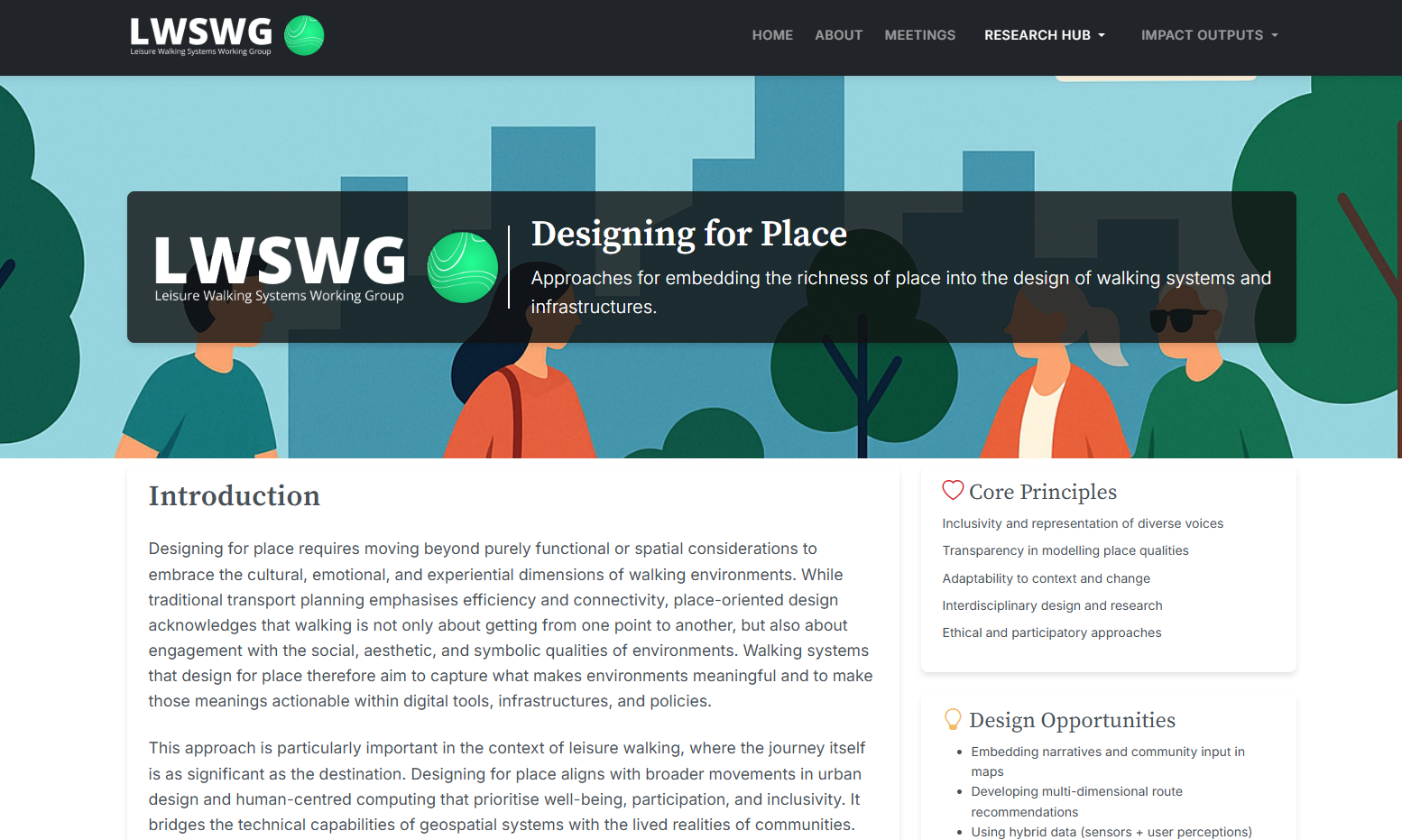
This approach has several advantages: it remains accessible to a broad audience, it can be easily updated and maintained, and it provides multiple entry points for different types of users.
Challenges and Lessons Learned
Timeline Constraints
The three-month timeline, whilst creating valuable momentum, presented significant challenges in achieving comprehensive coverage across all research areas. This constraint required careful prioritisation and strategic decision-making about which areas to focus on most intensively.
Balancing Academic Rigor with Practical Application
One of the ongoing challenges throughout the project was maintaining the appropriate balance between academic rigour and practical applicability. The target audience spans from academic researchers requiring detailed theoretical foundations to industry practitioners needing immediate implementation guidance.
Resource Integration Complexity
Integrating knowledge across multiple domains proved more complex than initially anticipated. Each research area has its own terminology, methodologies, and best practices, requiring careful synthesis to create coherent guidance.
Broader Implications and Future Directions
The LWSWG project demonstrates a successful model for academic-industry collaboration that could be replicated in other domains. The project’s structure, which brings together academic research with industry needs, creates value for both communities whilst advancing the overall field.
Knowledge Management and Dissemination
The project’s approach to knowledge management and dissemination represents a significant contribution to how academic research can be made more accessible and useful to broader communities. The combination of comprehensive documentation, digital platform development, and multiple access points creates a model for effective knowledge transfer.
Community Building and Sustainability
The establishment of a digital platform and community around leisure walking systems represents a foundation for ongoing development and collaboration.
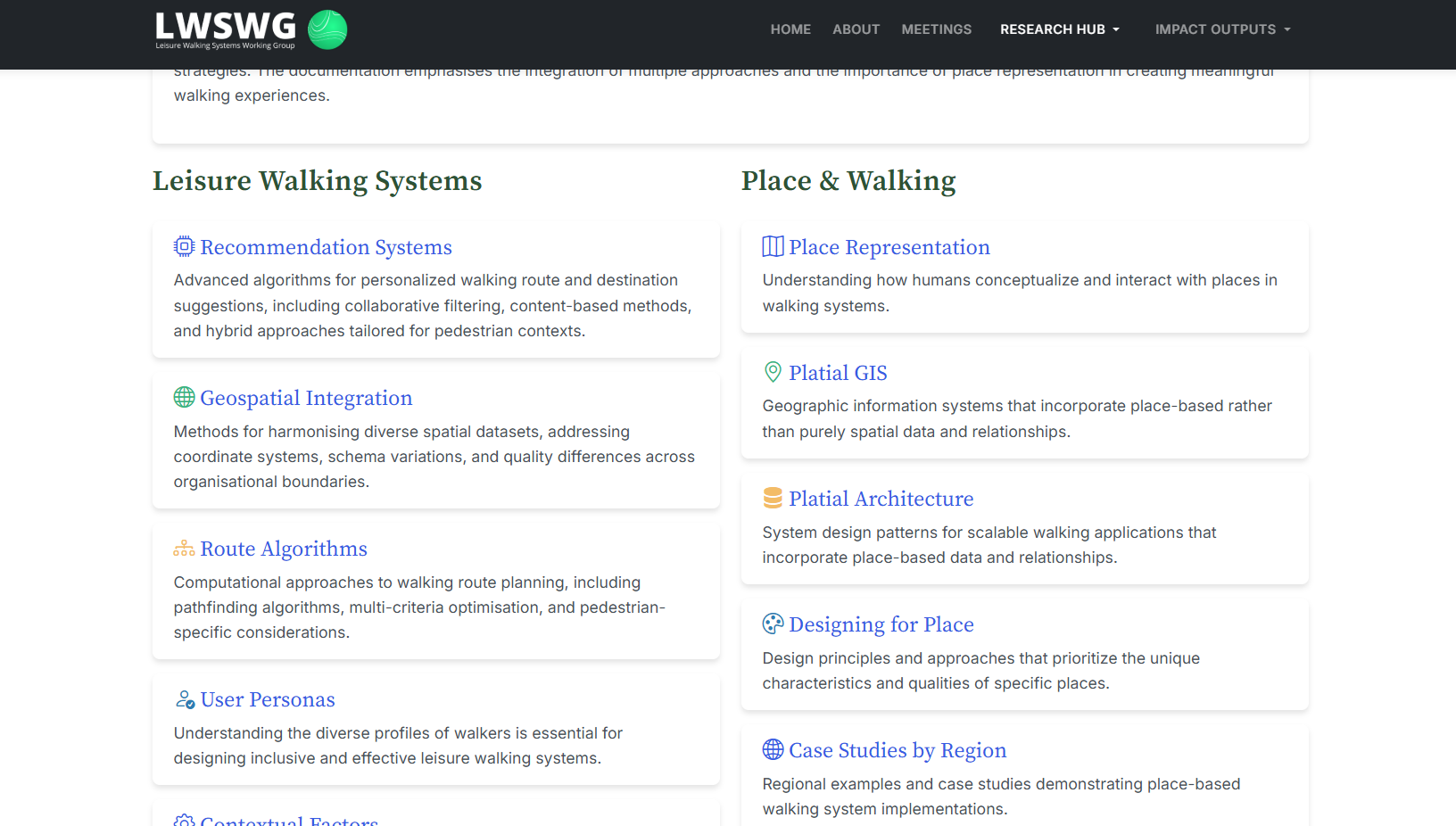
The sustainability of this community will depend on continued engagement and the ability to evolve with changing needs and technologies. The project has created a strong foundation, but ongoing investment and community management will be necessary to maintain momentum.
Conclusion
The LWSWG impact project has successfully delivered comprehensive resources that advance the field of leisure walking systems whilst demonstrating effective models for academic-industry collaboration. The project’s achievements in knowledge integration, practical resource development, and community building provide a foundation for continued development and impact.
The lessons learned during this project—regarding timeline management, balancing academic rigour with practical application, and integrating diverse knowledge domains—offer valuable insights for future similar initiatives. Perhaps most importantly, the project has demonstrated that it is possible to translate complex academic research into accessible, practical resources that can drive real-world implementation and improvement.
For those interested in engaging with the LWSWG community or accessing the resources developed through this project, visit lwswg.jwilliams.science.