The Leisure Walking Framework represents a shift from quantitative, efficiency-based routing to a model that prizes the subjective, human experience of place. While traditional GIS focuses on getting a user from A to B, this framework operationalises the experiential journey — how expectations are formed, how the narrative of a walk unfolds in real-time, and how reflection shapes future activity.
Developed through a rigorous Mixed Methods Grounded Theory (MM-GTM) approach, the framework synthesises data from large-scale behavioural surveys, expert professional interviews, and in-situ think-aloud studies. It provides a structured ontology — Tasks, Activities, Influences, Properties — that allows system designers to create tools that understand walking not just as physical movement, but as a complex interplay of motivation, environment, and personal narrative.
Research Context
Frameworks for walking have historically fragmented into distinct silos. Health frameworks focus on physical activity interventions and behavioural change. Walkability indexes measure urban form, density, and connectivity, often ignoring personal preference. Technical routing systems prioritise shortest paths or safety, treating “leisure” as simply a non-commute activity.
None of these approaches fully capture the personal and subjective nature of leisure walking — the “fuzzy” reasons why we choose a longer, scenic route over a short, busy one, or how a “successful” walk is defined by the narrative it creates rather than the calories burned. This framework was motivated by the need to evidence these subjective factors so they could be integrated into computational systems.
Framework Architecture
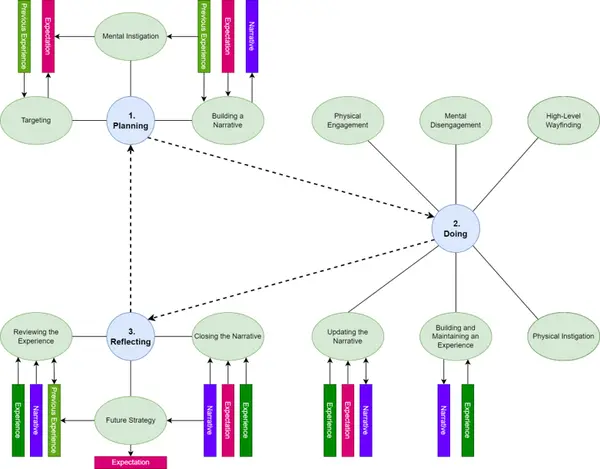
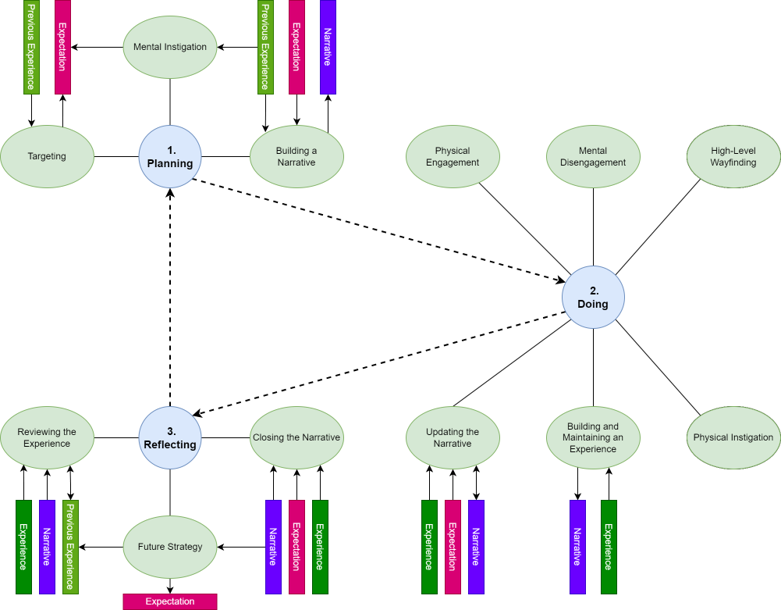
The framework is designed as an iterative procedural loop comprising three distinct tasks, using a four-level hierarchy to organise the complexity of the walking experience: Tasks (high-level phases) → Activities (actions taken during a task) → Influences (factors affecting actions) → Properties (specific, granular attributes).
Planning a Leisure Walk
This phase goes beyond simple route selection. It involves Mental Instigation (the urge to walk), Targeting (identifying places of interest), and Building a Narrative. Planning is heavily reliant on the tension between Local Knowledge and Online Knowledge — the user forms an Expectation of the walk, which serves as the benchmark for the experience.
Doing a Leisure Walk
The active phase where plan meets reality. This involves Physical Engagement, High-Level Wayfinding, and Updating the Narrative in real-time based on serendipitous discoveries or unexpected obstacles. A key insight: walking involves Mental Dissociation — periods where the walker disengages from the task to think, reflect, or simply be present. The Narrative is the log of what actually happens, often diverging from the Expectation.
Reflecting on a Leisure Walk
The closure phase where the walker reviews the event. This determines if the walk was “good” and integrates the experience into their Local Knowledge for future planning. Reflection transforms a specific instance (a walk) into generalised knowledge (expertise) — the Experience is the final synthesis: the comparison of Expectation vs. Narrative.
Methodological Approach
The framework was constructed using Mixed Methods Grounded Theory (MM-GTM), following the coding approach of Braun & Clarke (2006) and the framework design principles of Hignett (2015). Three distinct data collection phases were synthesised into the unified Tasks/Activities model:
- Leisure Walking Behaviour Survey — broad quantitative data on motivations and planning habits across a large participant sample
- Think-Aloud Study — in-situ, real-time decision making and emotional responses captured during actual walks
- Professional Interviews — expert perspectives on infrastructure, policy, and high-level routing strategies from practitioners
These datasets were coded and reconciled during collaborative analysis sessions, producing the framework’s full hierarchy of Tasks, Activities, Influences, and Properties.
Implications for System Design
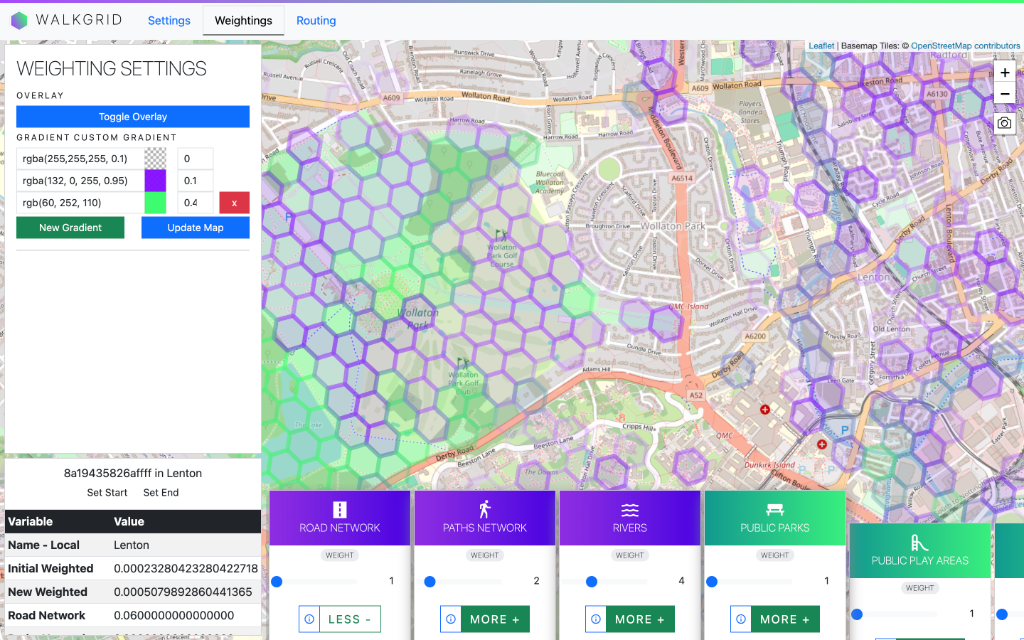
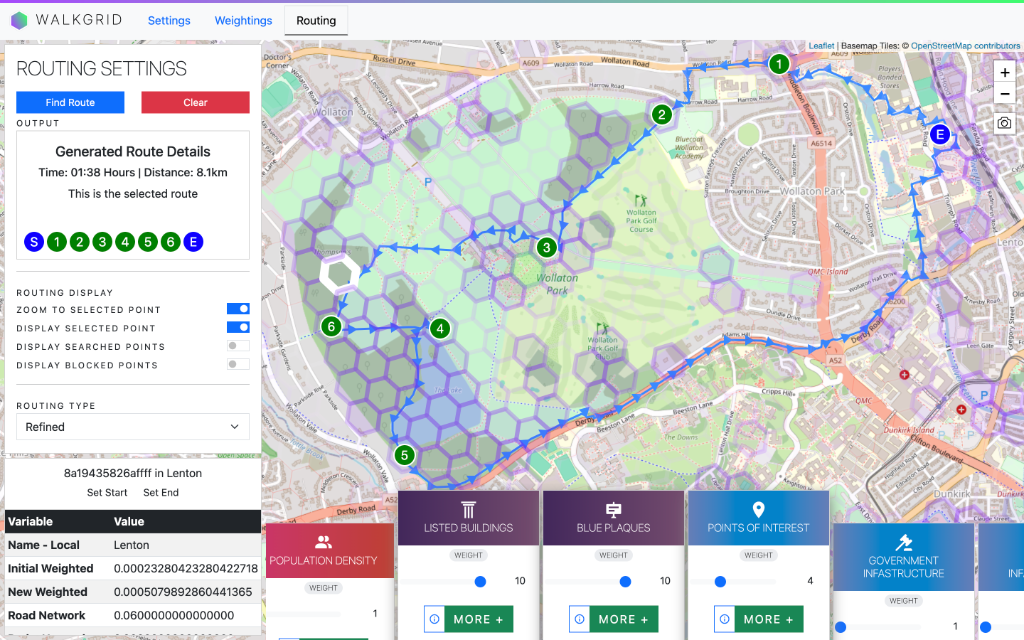
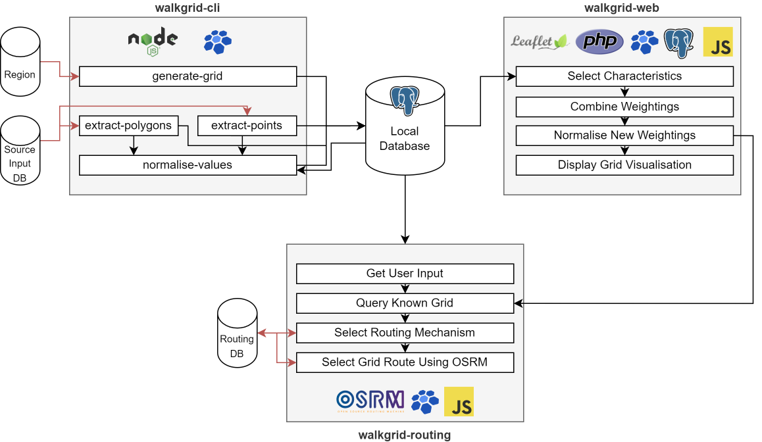
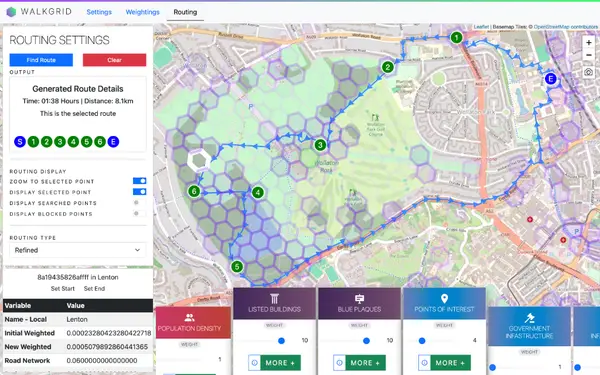
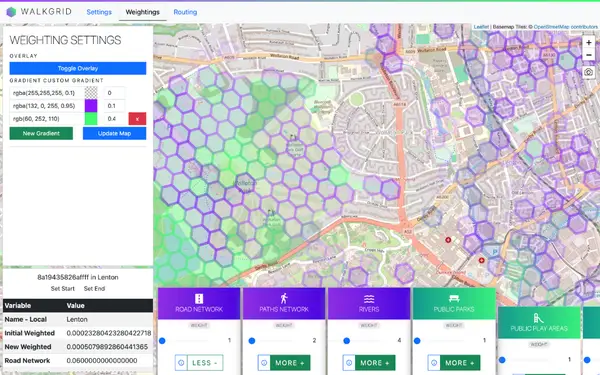
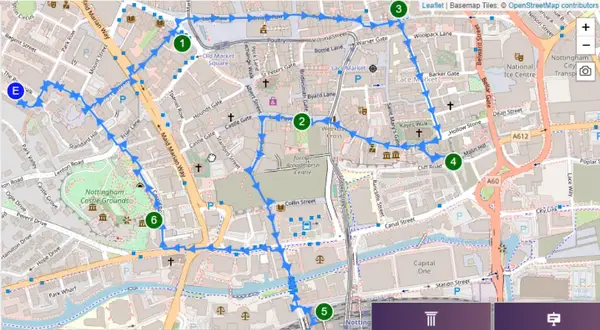
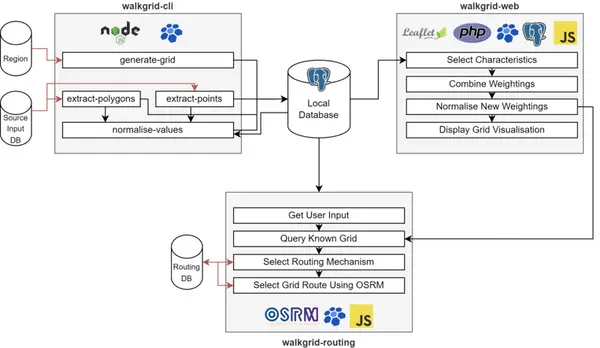
The Leisure Walking Framework serves as the theoretical foundation for next-generation routing technologies including WalkGrid and WalkGIS. It establishes that future walking tools must:
- Support Expectation Setting — allow users to define the “vibe” or narrative of a walk, not just the destination
- Enable In-Walk Adaptation — routing systems should support serendipity and mid-walk Narrative updating
- Capture Reflection — tools should allow users to feed experiences back into the system, turning Narrative into Local Knowledge for the community