

Find a city's
twin anywhere.
"Can a neural network learn the character of a city neighbourhood from map data alone — and find its twin on the other side of the world?"
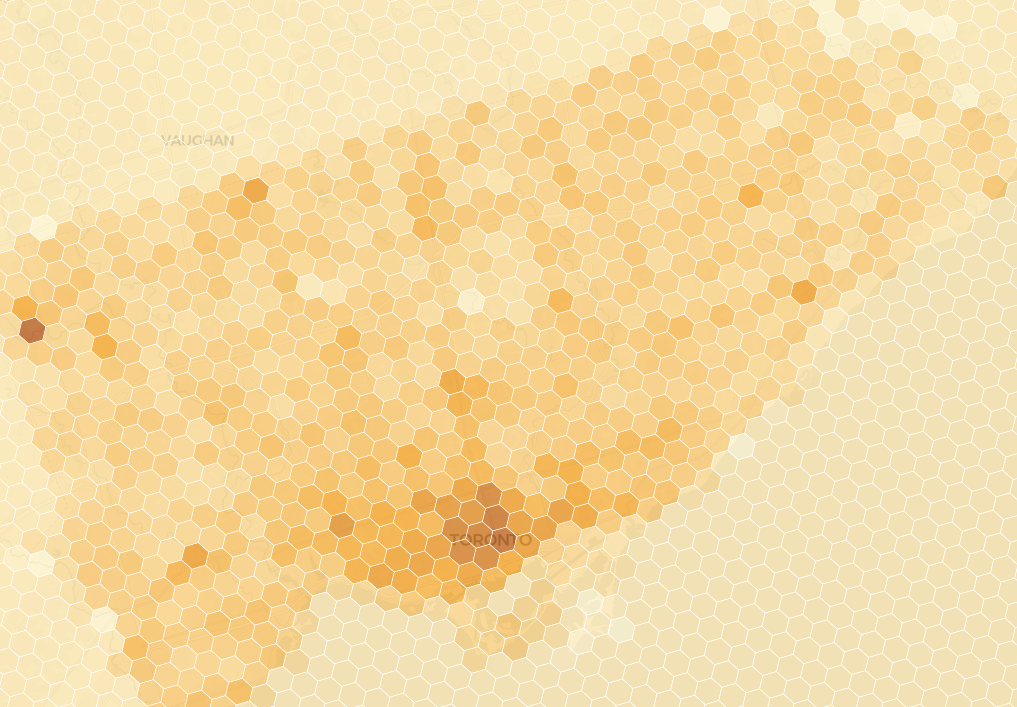
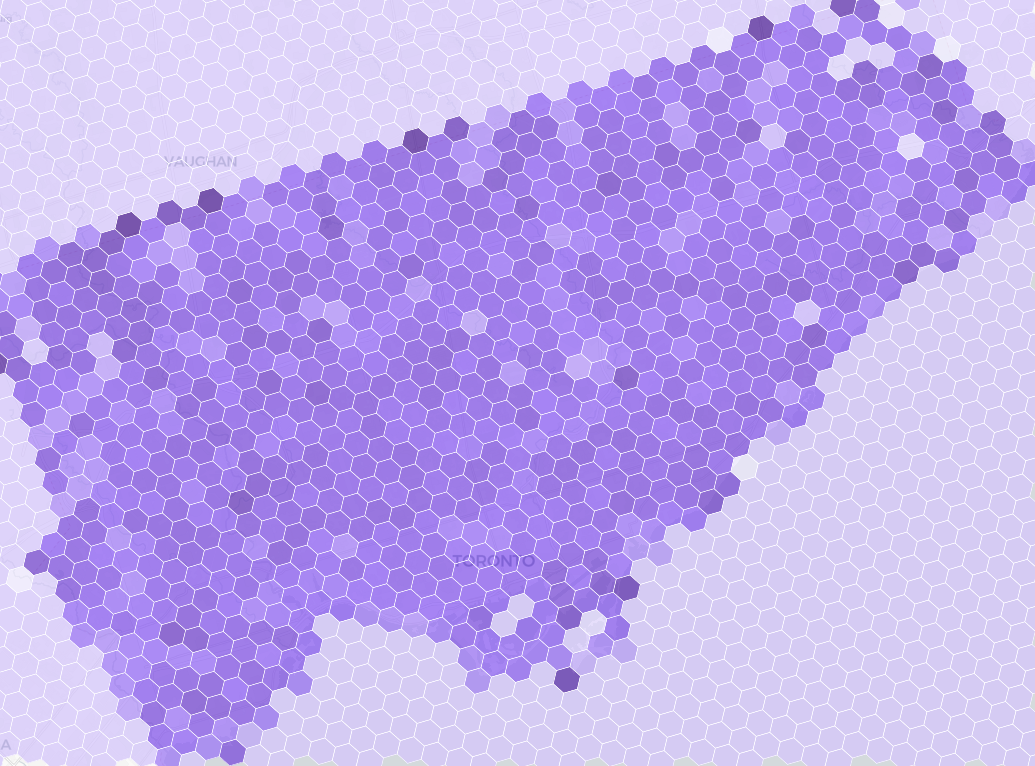
Computes ~120 morphological features per H3 cell from OpenStreetMap, then embeds each cell into a 64-dimensional vector space. Applied across 6 cities on 4 continents.
Pipeline
Four stages transform raw map geometry into a queryable embedding corpus.
~120 morphological metrics per H3 cell from OSM — road density, building coverage, block shape, perimeter ratios, and more.
Per-city standardisation ensures cross-continental comparability despite different urban scales.
A lightweight autoencoder compresses the feature matrix into a 64-dimensional vector per cell.
Nearest-neighbour search in embedding space reveals morphological twins across cities in milliseconds.
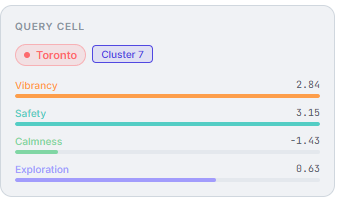
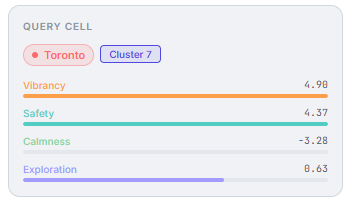
Embeddings & Urban Form
MORPHEME methodology paper in preparation. Application to slavery and war geographies ongoing.